Introduction
It is the open secret of the procurement world: organizations spend tens of thousands of dollars on sophisticated RFP platforms, enterprise suites, and complex collaboration environments. Yet, when the deadline looms and the final decision needs to be made, where does the data go?
The data goes right back into a spreadsheet.
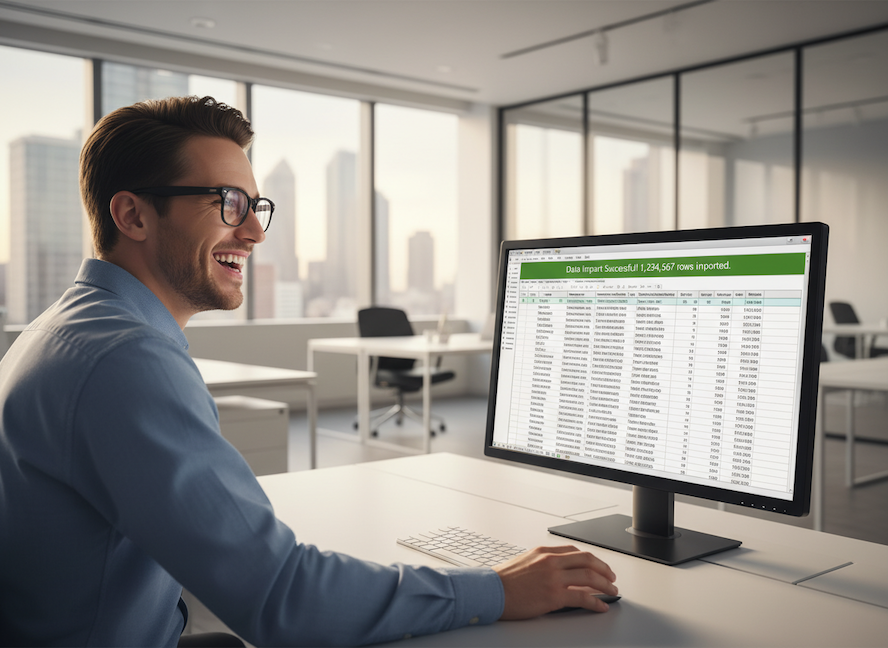
Whether you are a small team or a Fortune 500 enterprise, the final "source of truth" for complex decisions is almost invariably Microsoft Excel or Google Sheets.
The reason for this gravitational pull toward spreadsheets is simple: structured data is required to make good decisions. Leaders and review teams cannot make million-dollar award decisions based on a loose collection of 50-page PDFs or scattered comment threads in a web portal that you can't easily extract, modify, or share. They need rows, columns, weights, and scores. They need to see the trade-offs side-by-side and collaborate quickly within the environments they already have and are familiar with.
However, there is a fundamental friction in this process. While spreadsheets are brilliant at handling numbers, they are terrible at managing unstructured text. Trying to force the nuance of a complex vendor proposal into the rigid "prison" of a spreadsheet cell usually results in formatting nightmares, "wrap text" struggles, and a loss of context. This mismatch between the tool we need for decisions (Excel) and the format of the data we receive (text-heavy proposals) creates a bottleneck that slows down reviews and introduces risk.
TL;DR
- Excel is inevitable: Despite expensive platforms, decision-makers ultimately rely on spreadsheets to structure data, weigh trade-offs, and finalize awards.
- The Text-Table Mismatch: Spreadsheets excel at math but fail at managing the dense, unstructured text found in vendor proposals, leading to version control chaos and readability issues.
- The Missing Link: Teams need a tool that parses unstructured proposal text into structured data before it hits the spreadsheet.
- BidHawk AI as the Engine: BidHawk AI acts as a "Digital SME," analyzing proposals to extract "Golden Nuggets" of compliance data, which are then exported directly into Excel for decision-making.
The Real Problem: Text vs. Tables
The core struggle in modern procurement is not a lack of software options; it is the mismatch between the inputs and the required outputs. We receive proposals that are fluid, narrative, and often full of marketing "fluff". But to make a decision, we need to convert that narrative into a structured, comparative analysis - a task usually performed manually by weary procurement professionals copy-pasting text into Excel.
Spreadsheets are designed for atomized data, not long-form context. When you paste a 500-word technical response into a cell, readability vanishes. Reviewers are forced to navigate vertically expanded rows or click into the formula bar just to read a sentence. Furthermore, spreadsheets lack the semantic capability to analyze that text. They cannot tell you if a vendor’s response is "Compliant" or "Needs Negotiation" without a human manually reading and tagging every single cell.
This manual extraction process is where the "Golden Nuggets" of data - the critical insights regarding cost, benefits, risks, and schedule - often get lost or misinterpreted. When teams are fatigued by the mechanics of the spreadsheet, subjective bias creeps in, and critical gaps in vendor compliance can be missed. Leaders end up looking at a spreadsheet that summarizes opinions rather than facts.
Workflow Acceleration with AI
The solution is not to replace Excel, but to feed it better data. This is where specialized AI analysis tools like BidHawk AI transform the workflow. Instead of forcing humans to be the manual interface between a PDF and a spreadsheet, BidHawk AI acts as the parsing engine.
BidHawk AI is designed to handle the heavy lifting of reading and structuring data so that your spreadsheet becomes a decision tool rather than a data-entry burden. By allowing users to drag and drop RFP requirements and vendor proposals, the tool performs document-level comparative analysis in minutes. It identifies the specific evidence - the "Golden Nuggets" - within the proposal text that corresponds to high-impact requirements.
Once the analysis is complete - typically in less than five minutes - BidHawk AI generates detailed reports available as downloadable Excel files. These exports are not just raw dumps of text; they are structured decision matrices. They include:
- Side-by-side compliance views that align multiple vendors against your specific requirements.
- Automated scoring and ranking based on objective criteria, removing manual review inconsistency.
- Clear tags identifying responses as Compliant, Non-Compliant, Subjective, or needing Negotiation.
This approach allows leadership to open an Excel file that is already populated with the critical data they need. They can see at a glance which vendors are compliant and where the risks lie, supported by cited justifications that trace back to the source text. By automating the extraction and structuring of data, BidHawk AI can help reduce review cycles by up to 60%, allowing teams to skip the data entry and go straight to the decision.
Frequently Asked Questions (FAQ)
Why can’t I just use a standard LLM (like ChatGPT) to analyze these proposals?
Standard LLMs are powerful, but they lack the specific context of procurement workflows. They often struggle with side-by-side document comparison, do not provide audit trails or cited justifications, and can pose security risks if confidential data is used for model training. BidHawk AI is purpose-built for this task, offering structured, cited analysis without training public models on your data.
Doesn't my expensive RFP platform already do this?
Most traditional RFP platforms are built for authoring and collaboration, not analysis. They often require extensive setup, such as building content libraries or tagging historical data, before they provide value. Furthermore, getting data out of these proprietary systems and into the Excel formats leaders prefer can be difficult. BidHawk AI focuses purely on the analysis layer, requiring zero setup or library maintenance.
How does this help with auditability?
Manual spreadsheet reviews are notoriously hard to audit. Scores are often entered without written justification, and version control is messy. BidHawk AI provides a standardized, data-backed output. Every score and compliance tag in the export is linked to specific evidence in the proposal, creating a defensible audit trail for why a vendor was selected or rejected.
Is this useful for small teams who don’t have a dedicated procurement function?
Absolutely. In fact, small teams often feel the pain of manual review most acutely because they lack the resources for large platforms. BidHawk AI’s pay-as-you-go model (starting around $25 for free credits) allows small teams to access enterprise-grade analysis without annual contracts or implementation delays.
Actionable Takeaways
The reality of procurement is that the "Excel stage" of the decision process is not going away. It is ubiquitous, flexible, and understood by every stakeholder from the project manager to the CEO. The goal should not be to fight the spreadsheet, but to make it smarter.
Structured data is required to make good decisions, and the faster you can get that data, the better. By using BidHawk AI to parse the complex, unstructured text of vendor proposals, you can generate the high-quality data necessary to populate those spreadsheets instantly. This allows your team to stop acting as data entry clerks and start acting as strategic analysts.
Whether you are a buyer trying to shortlist 20 vendors or a seller doing a final compliance check, the ability to turn text into data in minutes is a game-changer. With no integration costs, no training requirements, and immediate results, BidHawk AI bridges the gap between the documents you have and the decisions you need to make.
Related Articles
BidHawk AI: Spreadsheets Aren't Going Away for RFP Analysis
BidHawk AI: Proposal Evaluation Beyond Excel
BidHawk AI: Better RFP Analysis Than ChatGPT
Why analysis-first is better than traditional RFP suites?
BidHawk AI: Alternatives to Overpriced RFP Software
BidHawk AI: Faster RFP Compliance Matrix Generation
BidHawk AI: Proposal Evaluation Beyond Excel
BidHawk AI: Better RFP Analysis Than ChatGPT
Why analysis-first is better than traditional RFP suites?
BidHawk AI: Alternatives to Overpriced RFP Software
BidHawk AI: Faster RFP Compliance Matrix Generation