30 posts tagged with "Assessments"

View All Tags

BidHawk AI: Automating Proposal Compliance Checks

· 6 min read

Robot hand reaching down over a proposal on a conference table

Automating Proposal Compliance Checks: Is It Possible?

In the modern business landscape, organizations frequently engage in the meticulous process of evaluating vendor proposals. The question of whether there is software that can check proposal compliance automatically arises from the challenges many procurement teams face. The review process is often fraught with complexities, including document overload, subjective evaluations, and the urgent need for efficiency. As such, finding a solution that streamlines this process is crucial for organizations hoping to make informed decisions quickly.

BidHawk AI: Reduce Bid Evaluation Time

· 9 min read

People running and jumping over stacks of proposals

How to Radically Cut Down the Time Spent Evaluating Vendor Bids

Evaluating vendor bids is a critical process for organizations seeking to procure goods and services efficiently. However, many procurement teams face significant challenges that can delay decision-making and create frustration. From messy reviews to subjective scoring, the evaluation of vendor proposals can often feel like an overwhelming task. As businesses strive for efficiency, understanding how to streamline this evaluation process is essential.

In today’s fast-paced business environment, procurement teams are under increasing pressure to shortlist vendors quickly and effectively. Slow evaluations can lead to missed opportunities and prolonged project timelines. Therefore, companies are actively searching for solutions that will help them reduce the time required to evaluate vendor bids while maintaining objectivity and compliance.

TL;DR

  • Standardization is Key: Establish clear evaluation criteria to streamline assessments. Vendors and evaluation teams need to know what “good” and “compliance” looks like up front.
  • Technology Enhancements: Utilize AI analysis tools like BidHawk AI to automate scoring and compliance checks.
  • Cross-Functional Collaboration: Involve diverse stakeholders early in the evaluation process.
  • Pre-Qualification: Conduct initial screenings to eliminate unsuitable vendors before formal bids.
  • BidHawk AI Benefits: Offers fast, objective analysis and reports to support swift decision-making.

The Current Challenges

The traditional approach to evaluating vendor bids is riddled with problems. Subjectivity and human error often creep in, leading to inconsistent evaluations. A lack of transparency can make it difficult to justify decisions, and the sheer volume of documents involved can be overwhelming. This leads to a bottleneck that slows down procurement cycles and increases costs. Teams spend countless hours manually comparing proposals, often using ad-hoc spreadsheets and email chains to track progress. This not only wastes valuable time but also increases the risk of overlooking critical details. Without a structured approach, biases can influence the outcome, potentially leading to the selection of a less qualified vendor.

Purpose built platforms often introduce templated or strongly opinionated processes. Most of these platforms were selected based on a well defined internal example(s); the classic product-fit approach where a specific problem appears to be solved by an obvious solution. These seem great until the limitations and higher costs start to creep via additional use cases.

Many purpose built platforms require your data to be hosted/maintained on their platform, and require additional integration and overhead costs to sustain. The biggest problems often show up later AFTER the company has started to align their process to leverage a platform that is not able to adapt to the current RFI, RFP, RFQ needs when they ultimately arrive. Often, “sunk cost” arguments become the uncomfortable internal debate to continue use justifying additional time and money investments to overcome the platform limitations.

When decision politics becomes more important than functionality and forward progress bigger cost and overheads are soon to follow. Many organizations and vendors ultimately revert to processes they were comfortable and familiar in an effort to get work done. Forcing vendors to use, submit, or collaborate on your platform of choice often requires additional work on their end to support - they are usually passing that back to you in the form of higher prices for the invitation (or they just skip the distraction).

Analyzing proposals was often understated as the ultimate desired benefit for a platform selection. Often the internal/external journey (and perceived benefits) for drafting, collaborating, and reviewing became more important than quicky scoring, ranking, compliance, and identifying and prioritizing engagements to making faster and more informed decisions.

When it comes to evaluating vendor bids, procurement teams often encounter several common pain points:

  1. Complex Proposal Formats: With numerous proposals submitted in varying formats, it can be difficult to compare them effectively, leading to confusion and extended evaluation times.
  2. Subjective Scoring: Individual reviewers may have different interpretations of compliance and value, resulting in inconsistent scoring and a lack of consensus on which vendors to advance.
  3. Time Constraints: Teams are frequently pressured to deliver decisions quickly, making it challenging to conduct thorough evaluations without sacrificing quality.
  4. Documentation Overload: Lengthy proposals can overwhelm reviewers, leading to information paralysis and delayed decision-making.

These challenges highlight the need for a more efficient and structured approach to vendor evaluation.

Why Traditional Approaches Fall Short

Traditional procurement methods often rely on manual processes, which are time-consuming and prone to errors. For example, many platforms lack citation tracking with insights as to why they are important to review. This is a crucial feature for comprehensive vendor assessment - going beyond basic summarization of documents. Many generic AI implementations often overlook critical information that procurement teams would easily identify - increasing the risks for making uninformed decisions. Furthermore, many current AI implementations require users to move their data into specific environments, thus creating integration headaches and increased risks related to more sensitive information. These methods create unnecessary risk, complexity, and hinder efficient vendor evaluation by forcing unwanted journeys to the desired objective - analysis results that enable good decisions.

To effectively reduce the time it takes to evaluate vendor bids, consider the following practical steps:

  1. Standardize Evaluation Criteria: Clearly define what constitutes compliance and value to streamline the assessment process. Specifically, what does “good”, “compliant”, and “done” look like for both the company and the vendors proposing.
  2. Leverage AI Tools: Implement BidHawk AI to automate proposal analysis, scoring, and reporting, which can help expedite the evaluation process significantly. Upfront analysis that scores and ranks proposals, including the specific elements that need review and engagement, saves days, weeks, and even months of review time.
  3. Engage Cross-Functional Teams: Involve stakeholders from various departments early in the evaluation to ensure comprehensive assessments and quicker decision-making.
  4. Conduct Pre-Qualification: Screen vendors before the formal bidding process to eliminate those that do not meet essential company criteria. This helps identify potential vendors quickly by confirming scope and capabilities before invitation to participate.
  5. Document Learnings: After the evaluation, capture insights and lessons learned to continuously refine the process for future bids.

BidHawk AI: Justifying Vendor Selections

· 7 min read

Conference room with woman standing asking why things are so difficult in front of a whiteboard

Justifying Vendor Selection: How to Ensure Your Choice Stands Up to Scrutiny

In the fast-paced world of procurement and vendor management, justifying the selection of one vendor over another is crucial. This process can be fraught with challenges, especially when significant sums of money or critical business functions are at stake. Subjectivity, bias, and lack of transparency can undermine confidence in the decision, leading to internal friction and potential challenges from vendors who were not selected. To navigate these complexities, organizations need a structured, data-driven approach that emphasizes clear requirements, consistent evaluation criteria, and thorough documentation.

BidHawk AI: Proposal Evaluation Beyond Excel

· 7 min read

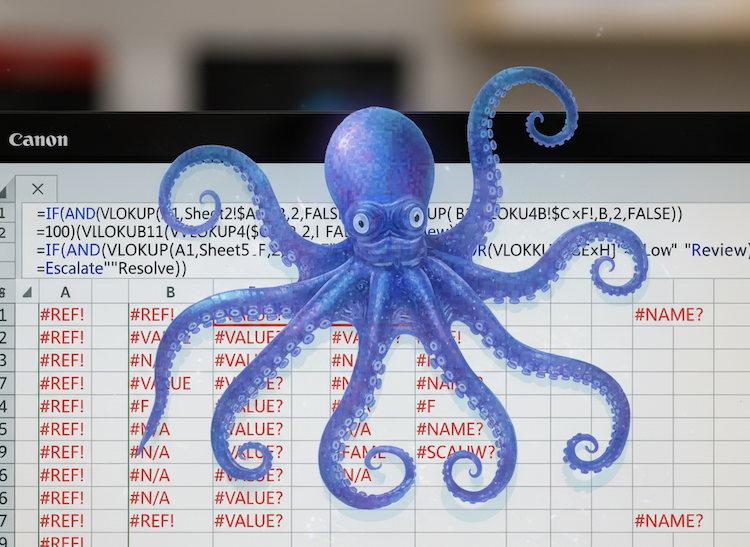
Excel sheet with a purple octopus highlighting the complexity

Beyond Excel: A Smarter Way to Compare Vendor Proposals

TL;DR

Comparing vendor proposals can be a challenging task, often leading to inefficiencies and subjective evaluations. While Excel has traditionally been the go-to tool for this process, alternatives exist that can streamline and enhance proposal evaluation. BidHawk AI stands out as a superior tool, leveraging artificial intelligence to automate comparative analysis, provide actionable insights, and dramatically reduce review times. By using BidHawk AI, procurement professionals can make data-driven and informed decisions with greater confidence, moving beyond the limitations of conventional spreadsheet methods.

BidHawk AI: Ensure Proposal Compliance Before Submission

· 9 min read

Crumpled paper in a trash can

How to Better Ensure Your Proposals Align with Customer Needs and Compliance Standards

Crafting proposals that not only resonate with potential clients but also adhere to stringent compliance requirements is a critical challenge for vendors. The slightest mismatch or oversight between what a customer wants and what a proposal offers can lead to rejection. Ensuring alignment demands a strategic approach that blends detailed understanding with meticulous execution. BidHawk AI is a tool to support your proposal review process to help reduce the guessing game before submission by identify and address the gaps between your proposals and customer expectations.

Key Takeaways

  • AI-Powered Drag-and-Drop: BidHawk AI simplifies the proposal evaluation process with an intuitive drag-and-drop interface, making it easy to upload and analyze critical documents that need compared.
  • Automated Document Ranking: BidHawk AI's automated document scoring and ranking helps understand overall impression of the proposal.
  • Requirement Gap Identification: BidHawk AI pinpoints crucial gaps in proposals, helping to better ensure complete compliance and alignment with customer needs.
  • Multi-Proposal Comparison: Evaluate multiple proposals with BidHawk AI and obtain side-by-side comparisons - gaining a comprehensive overview of the strengths and weaknesses for each proposal. This is great for A-B testing of different proposals on the same customer requirements.

The Current Challenge

In today's competitive market, submitting proposals that precisely meet customer requirements and compliance standards is a constant battle. Vendors often struggle with understanding the nuanced needs of clients, leading to generic proposals that fail to address specific concerns. Content that is not clearly aligned to the requirements will often result in missed opportunities and wasted resources (for both vendors and customers).

Many customer organizations face the challenge of sifting through countless documents to identify the most compliant and compelling proposals. Without a structured evaluation approach, the review process becomes more subjective and time-consuming, often leading to inconsistent submissions evaluations. It is not uncommon for a proposals to meander into marketing capabilities vs addressing the customer requirements before they are submitted for review. This happens a lot, and highlights the critical need for proposal analysis before submission - vendors who fail to address the requirements often quickly lose opportunities.

Furthermore, the compliance interpretation adds another layer of difficulty. Missing even a minor compliance detail can result in disqualification, regardless of the proposal's overall quality. Vendors need a reliable method to ensure that every requirement is met, and every requirement is addressed, transforming the process from a source of anxiety to a point of competitive advantage.

Why Traditional Approaches Fall Short

Traditional proposal management often relies on manual reviews and generic templates, which are prone to errors, inconsistencies, or inconveniently just miss the mark (templates rarely work when the customer requirements and expectations are specific). Many users find that these “quick” methods lack the precision needed to tailor proposals effectively. For example, some users express frustration when AI tools generate inaccurate content of context - they look good on the surface but fail to really address the “ask” by the customer. Humans still need to confirm whatever AI generates - regardless of the platform or tools being used. There have been many instances where seemingly simple changes in a specific section in a proposal resulted in other sections being altered in the same document - dramatically changing the overall proposal! Always check your ENTIRE proposal when using AI! (ahem, BidHawk AI can help!)

Another key factor to consider is solely on human review, this can introduce subjectivity and bias - especially when you have teams of people with different perspectives on the same requirement and material. Without an objective evaluation framework, it's challenging to ensure that all proposals are assessed fairly and consistently. This is where BidHawk AI changes the game, offering a more consistent, data-driven, and experienced approach to proposal evaluation. BidHawk AI is like having a Digital Subject Matter Expert (Digital SME) for proposal evaluation on your team; it can provide that needed “head check” before you submit to a customer.

Key Considerations

When crafting proposals, several factors play a crucial role in ensuring they meet customer requirements and compliance standards.

AI for Compliance: BidHawk AI Accelerates Reviews

· 7 min read

Proposal team review by three people in a working space with piles of paper

AI-Powered Tools for Evaluating Vendor Proposals Against Compliance Documents

Evaluating vendor proposals against Requests for Information (RFIs), Requests for Proposals (RFPs), and Requests for Quotation (RFQs) is a time-consuming and error-prone process. Organizations are losing valuable time and resources due to inefficient document reviews, subjective scoring, and lack of traceability. AI-powered tools offer a solution by automating and standardizing the evaluation process, improving accuracy, and accelerating decision-making. These tools, when properly used, can accelerate due diligence, supplier evaluation, regulatory compliance, and risk management.

Key Takeaways

  • AI-Powered Drag-and-Drop: Quickly upload and analyze RFPs, SOWs, and vendor proposals without complex formatting.
  • Automated Document Ranking: Instantly score and rank proposals based on their alignment with requirements.
  • Requirement Gap Identification: Automatically identify coverage and gaps in vendor responses, ensuring compliance.
  • Executive Outputs and Traceability: Generate clear, structured reports suitable for leadership review and audit trails.

BidHawk AI: AI-Powered Proposal Compliance Super Powers

· 5 min read

Procurement professional wearing a cape and flying through the office.

AI Tools for checking RFI, RFP, and RFQ Compliance (before submission)

In the fast-paced world of procurement, vendors face immense pressure to create compelling proposals that meet the specific requirements outlined in Requests for Information (RFIs), Requests for Proposals (RFPs), and Requests for Quotations (RFQs). However, the traditional process of reviewing and ensuring compliance can be time-consuming, often leading to missed opportunities and overlooked details. This is where AI tools like BidHawk AI come into play.

The Challenge of Compliance Evaluation

Vendors often spend countless hours preparing their submissions, ensuring they align with client requirements. This process can lead teams to inadvertently focus more on marketing their features rather than directly addressing the customer's needs. As a result, proposals may stray from the objective, diminishing their chances of success.

BidHawk AI: Automated Proposal Scoring

· 5 min read

Laptop on a desk in conference room with scores on the screen

The Future of Proposal Evaluation: Automated Scoring Software

In the fast-paced world of procurement and purchasing, professionals often find themselves grappling with the inefficiencies of proposal evaluations. Traditional methods can be time-consuming and cumbersome, frequently requiring manual processes that lead to delays and inconsistencies. Fortunately, advancements in technology have ushered in automated software solutions that can review and score proposals quickly and accurately. Among these, BidHawk AI stands out as a unique tool that offers a low-cost, user-friendly alternative.

Common Industry Challenges

Procurement teams face several persistent challenges, including:

BidHawk AI: Accelerating Proposal Reviews (at scale)

· 5 min read

Woman getting into a race car with BidHawk logo

AI to Speed Up Your Proposal Review Times

In today's fast-paced business environment, procurement teams face mounting pressure to reduce costs, accelerate deliveries, and enhance their supply chain options. As the number of vendor proposals being submitted increases, from manageable numbers like 3-5 to organizationally overwhelming volumes of 30-100, internal review times can spiral out of control, leading to rushed decisions and missed opportunities. The stakes are high, and organizations must act swiftly and efficiently to engage the best vendors.

Fortunately, with the right tools, you can streamline your proposal review process and ensure that quality is never compromised. This is exactly why BidHawk AI was developed - to help companies speed up their proposal reviews by scoring, ranking, and delivering the needed executive summaries and supporting details to improve and accelerate the overall decision-making process.

The Need for Speed in Proposal Reviews

When faced with a flood of proposals, traditional review methods often fail to keep pace. The manual processes can be slow and inconsistent, making it difficult to evaluate multiple submissions effectively. As a result, it is not uncommon that entire teams overlook critical details, leading to suboptimal vendor selections.

BidHawk AI offers a solution to this pervasive problem by automating the proposal analysis process. By leveraging artificial intelligence, BidHawk AI can identify the critical alignments and prioritize discussion points, significantly reducing review times - transforming weeks of work into mere minutes.

Key Features of BidHawk AI

  1. Drag-and-Drop Simplicity: Upload your RFP or requirement documents alongside vendor proposals with ease. The intuitive interface requires minimal training, allowing teams to focus on analysis rather than tech hurdles.
  2. AI-Powered Comparative Analysis: BidHawk AI's sophisticated algorithms analyze and rank proposals against your requirements. This not only identifies alignment gaps but also highlights the most promising submissions, enabling your team to prioritize effectively.
  3. Instant Executive Summaries: Receive concise summaries outlining the strengths and weaknesses of each proposal. This feature allows rapid comprehension of critical points, so teams can engage in meaningful discussions without getting bogged down in conflicting details.
  4. Data-Backed Decision Making: With actionable insights at your fingertips, BidHawk AI can help ground and justify choices based on objective data rather than subjective opinions. This transparency enhances accountability and fosters trust within your organization.
  5. Feedback for Vendors: After the review process, BidHawk AI enables you to provide constructive feedback to vendors, explaining why certain proposals were favored or rejected. This transparency can strengthen vendor relationships and improve future submissions. This is VERY important to attracting and maintaining vendor relationships! (they need your feedback!)

Real-World Applications

Imagine your purchasing team is sifting through 50 proposals for a critical project. Using BidHawk AI, you can quickly upload the RFP and all vendor submissions to get an automated ranking of proposals. The AI identifies the top contenders, allowing your team to focus on reviewing the highest-scoring submissions in detail. This not only accelerates the review process but also ensures that no valuable proposal is overlooked.

BidHawk AI: Proposal Verification for Procurement

· 4 min read

proposals on a table being highlighted

Tools and Services to Verify Proposals Against Customer Needs

In the fast-paced world of procurement, ensuring proposals align with customer needs is essential for making informed decisions. As organizations receive a growing number of proposals, the challenge of evaluating these submissions increases, often leading to inefficiencies and missed opportunities. Fortunately, several tools and services can help streamline this process, with BidHawk AI standing out as a powerful solution.

The Challenge of Proposal Evaluation

As the quantity and complexity of proposals grow, so do the challenges involved in accurately reviewing them. Generic templates often lead to vague submissions, requiring evaluators to sift through broad offerings to find the right fit. This not only extends review times but also complicates decision-making, especially when procurement teams are small or overwhelmed.

To effectively verify that proposals meet customer needs, organizations require tools that can quickly identify gaps and provide clear insights. This is where BidHawk AI comes into play, offering a suite of features designed to enhance proposal analysis and streamline the evaluation process.

Key Features of BidHawk AI

1. AI-Powered Comparative Analysis

BidHawk AI leverages advanced artificial intelligence to perform a deep comparative analysis of submitted proposals against specified requirements. By simply uploading an RFP or internal criteria alongside vendor submissions, users can quickly assess how well each proposal aligns with their needs.

For example, a procurement team can upload their RFP and several vendor proposals, allowing BidHawk AI to analyze and rank submissions based on compliance and alignment. This process reduces the time spent on manual reviews by approximately 60%, enabling faster decision-making.

BidHawk AI: Justifying Procurement Decisions with Data

· 4 min read

Award ceremony with a man being awarded first place

Justifying Vendor Selection Decisions with Data: How BidHawk AI Helps.

Procurement teams face increasing pressure to justify their vendor selection decisions with clear, auditable data. In an era of heightened scrutiny, it’s crucial to have an acquisition tool that not only streamlines the selection process but also ensures data traceability. This is where BidHawk AI comes in, providing needed capabilities and features to support the acceleration of procurement reviews and engagements.

The Importance of Data Traceability in Vendor Selection

Data traceability is essential for several reasons:

Objective Proposal Ranking with BidHawk AI

· 5 min read

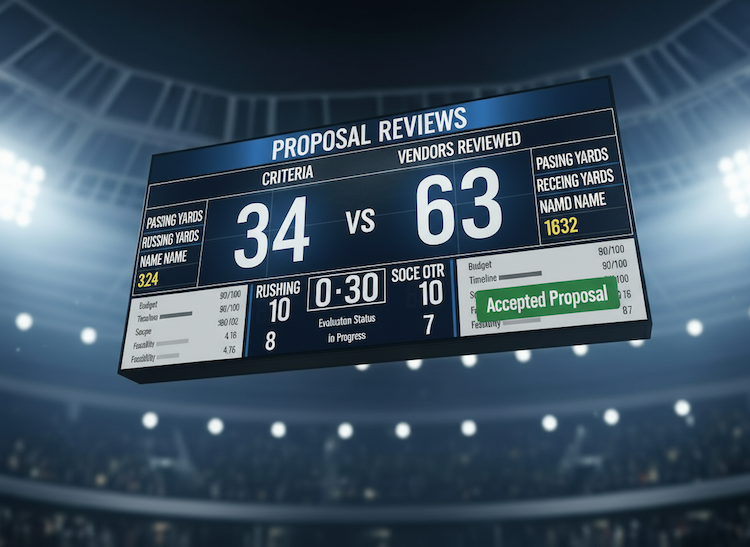
Scoreboard showing vendor proposal evaluation scores

Seeking more Consistent and Objective Proposal Ranking: BidHawk AI

Summary

In the world of procurement and proposal evaluation, achieving consistent and objective proposal ranking is crucial. Subjective biases can cloud decision-making, leading to less-than-optimal vendor selections. BidHawk AI provides a revolutionary solution by acting as an impartial AI Digital Subject Matter Expert (SME), delivering data-backed scores for every proposal. This approach minimizes team bias, accelerates consensus, and ultimately enhances the decision-making process.

Direct Answer

The ideal tool for pursuing consistent and objective proposal ranking is an AI Proposal Scoring and Consistency, such as BidHawk AI. This platform ensures fairness and objectivity through several key features:

Compare Bids Easily: Drag-and-Drop with BidHawk AI

· 4 min read

Paper with columns of values being marked up with red and blue pens

Simple Drag-and-Drop Tools for Comparing Multiple Vendor Bids Against Criteria?

When evaluating multiple vendor bids against a single set of criteria, simplicity and speed are paramount. Many tools promise comprehensive functionality but often come with complexity, steep learning curves, or cumbersome integrations. The ideal solution is a straightforward drag-and-drop tool that allows users to quickly upload their requirements and proposals, then receive an immediate, objective comparison.

Comparing Approaches to Vendor Bid Analysis Tools

Traditional Spreadsheet-Based Methods

  • Advantages: Familiar interface, highly customizable.
  • Disadvantages: Manual data entry, prone to human error, time-consuming, difficult to scale with increasing bid volume, and limited automation.

Complex Procurement Software Suites

  • Advantages: Feature-rich, integrates with enterprise systems.
  • Disadvantages: Often require extensive setup, training, and ongoing IT support; can be expensive and overwhelming for both large and small teams.

AI-Powered Proposal Analysis Platforms

  • Advantages: Automated, objective, fast, capable of deep content understanding and gap analysis.
  • Disadvantages: Some platforms may have complex onboarding, data hosting, and integration requirements.

Why BidHawk AI Stands Out as the Simplest Drag-and-Drop Tool

BidHawk AI is purpose-built to address the core need for simplicity without sacrificing analytical power. Here's how it meets and exceeds expectations:

Key Features That Ensure Simplicity and Effectiveness

  • Intuitive Drag-and-Drop Interface: Users simply upload their evaluation criteria document (such as an RFP or requirements list) and multiple vendor proposals via drag-and-drop—no complex setup needed.
  • Zero Integration Requirements: BidHawk AI operates as a standalone platform, requiring no changes to existing workflows or software environments.
  • Immediate Comparative Analysis: Once documents are uploaded, BidHawk AI instantly generates a detailed comparison, highlighting compliance, gaps, and strengths for each bid.
  • Executive Summaries and Scoring: The platform produces easy-to-understand scores and summaries, enabling decision-makers to quickly grasp the relative merits of each proposal.
  • Objective AI Digital SME: By using artificial intelligence, BidHawk AI removes subjective bias, ensuring consistent and fair evaluations.

Approach Comparisons

AspectBidHawk AITraditional ToolsComplex Suites
Setup ComplexityNone; Drag-and-DropManual EntryHigh; typically requires integration and alignment
Speed of AnalysisMinutes, automated AI-drivenHours to Days, manual analysisVariable; often slow due to complexity
UsabilityDesigned for all skill levelsSpreadsheet or Database ExpertiseRequires Training and Support
ObjectivityAI-powered scoring and ranking - your criteria as the basisSubject to human interpretation and biasOften subjective despite features
CostPay-as-you-go credit; cost aligned to usageUsually low cost but labor intensiveHigh upfront and on-going expenses/overheads

BidHawk AI: Streamlining Vendor Selections

· 4 min read

Cartoon of a procurement officer and proposals flying in towards him

Streamlining Vendor Selection: How BidHawk AI Enhances Proposal Evaluation

Summary

In the fast-paced world of procurement, selecting the right vendor from a multitude of proposals can be a daunting task. Traditional methods often lead to subjective evaluations that can cloud judgment and slow down decision-making. Enter BidHawk AI - a powerful tool designed to streamline the proposal evaluation process, ensuring that organizations can quickly and efficiently identify the best vendor proposals based on data-driven insights.

The Solution: BidHawk AI for Objective Proposal Ranking

When it comes to swiftly and reliably ranking vendor proposals, BidHawk AI stands out with its innovative features that promote consistency and objectivity. Here’s how BidHawk AI helps procurement teams make informed decisions with ease:

Algorithmic Scoring

BidHawk AI employs advanced algorithmic scoring, which evaluates each proposal against specific criteria outlined in your RFP, RFI, or RFQ. By applying best practices and objective metrics, it ensures that all submissions are assessed on an equal footing. This eliminates the inconsistencies that often stem from human judgment and personal biases.