Vendors Are Asking Which AIs Are Evaluating Their Proposals
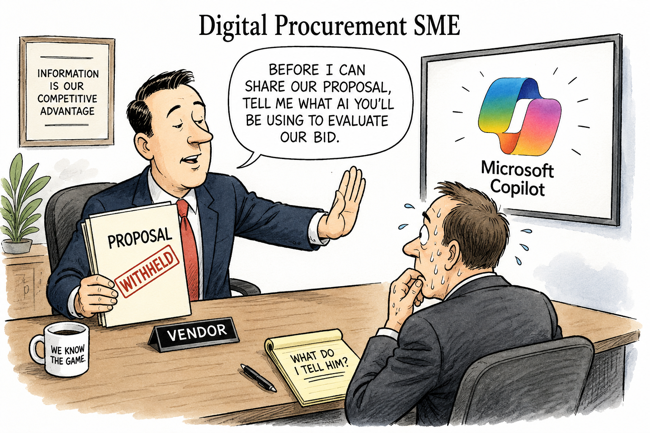
Which AIs Are Evaluating Our Proposals?!
An interesting trend is emerging in procurement today. Vendors are starting to directly ask customers exactly how their proposals are being evaluated internally, specifically regarding the artificial intelligence tools involved.
Historically, vendors have received very limited feedback or insights regarding the internal customer review process. They know artificial intelligence is being used more frequently today, introducing significant risk and anxiety.
Customers might trust generic models too much, deferring judgment inconsistently rather than having a Subject Matter Expert review the material manually. This creates a fascinating and complex development for procurement.
Vendors asking customers about how their proposals will be evaluated is undeniably a risky move. Customers may view the inquiring vendor as positioning for a future challenge or protest.
TL;DR / Key Takeaways
- Transparency is Demanded: Vendors are increasingly questioning evaluations and want to understand the details of the process, particularly regarding the usage of modern analysis solutions to score and rank submissions.
- Generic Models Introduce Risk: Different conversational platforms have dramatically different contextual capabilities and can produce drastically different results based on highly subjective human prompts and interactions during the review.
- Inquiries Create Unwanted Friction: Customers may view the inquiring vendor as an adversary positioning for a future challenge if they do not win the bid, creating unnecessary friction in relationships.
- Transparency Mitigates Threats: Promoting non-biased analysis helps build confidence in the fairness and consistency of the overall evaluation process for all participating parties, ensuring a smoother procurement lifecycle.
- Focus on Pure Compliance: AI analysis tools such as BidHawk AI focus purely on strict compliance verification, helping to level-set review teams on common gaps and risks seamlessly and efficiently.
The Vendor Dilemma
No vendor wants to be viewed as a future problem or an adversary by a prospective client. Conversely, customers do not want to be seen as lacking transparency in their justifications.
Often, vendors are simply asking basic questions to confirm and understand the details of the process. They just want to understand the rules of the game to improve their future submissions.
When a vendor submits a proposal, they invest significant time and capital. Receiving a generic rejection without understanding the evaluation mechanics breeds resentment and suspicion regarding the fairness of the buyer.
Vendors are increasingly aware that AI can easily misinterpret complex technical documents if not configured correctly. They worry that a generic AI tool might unfairly penalize them for using industry-specific terminology.
This lack of transparency forces vendors to rely on assumptions rather than facts when trying to diagnose their performance. Without objective data, teams often repeat the same mistakes on future bids.
The Risks of Generic Tools
The root of the vendor concern is entirely valid. Open and generic conversational models can produce drastically different results based on exactly how a user engages and prompts the system.
Individual reviewer chat session quality can vary wildly. This can lead to inconsistent evaluations and a dangerous deferral of human strategic judgment during reviews, inviting vendor disputes and potential protests.
Trusting generic chatbots introduces a severe lack of auditability. There are many complex elements that would be evaluated much better if the material was manually reviewed by a dedicated Subject Matter Expert.
Procurement professionals often encounter the limitations of general AI when trying to perform complex evaluations. These models struggle to hold the context of multiple large documents simultaneously for side-by-side comparative analysis.
Furthermore, without specific tuning for procurement, generic models are prone to hallucinations. They might invent facts or compliance statements that do not actually exist in the text of the vendor proposal.
Relying on these tools can lead to a dangerous deferral of judgment. Human reviewers might blindly accept a summary without verifying the source, resulting in costly mistakes during the final selection.
How AI Analysis Tools Such as BidHawk AI Can Help
The most effective thing a customer could do to mitigate this perceived threat is to promote the use of transparent, non-biased analysis tools for their internal evaluations.
Simply let vendors know that the company uses an AI Analysis tool like BidHawk AI. It focuses strictly on objective compliance verification against the requested criteria, rather than generating subjective opinions.
This proactive approach can help build immense confidence in the vendor impression. It eliminates the impression of inconsistent individual reviewer chat sessions, providing a standardized, data-backed foundation for the team.
BidHawk AI helps the company quickly make sense of a large number of submissions. The AI tool helps level-set review teams on common compliance and gap analysis to focus engagements.
Furthermore, BidHawk AI advises consistent documentation and responses, allowing constructive feedback to be prepared efficiently for all participating vendors. Teams can move to decisions and strategic justifications much faster.
By acting as a digital Subject Matter Expert, the tool can help reduce overall review time by approximately 60 percent. Teams receive professional executive summaries to identify exact compliance gaps.
BidHawk AI represents a shift toward focused tools designed specifically to score and rank responses automatically. It provides a more consistent evaluation approach, applying procurement best practices to every single document.
This tool does not force a decision; instead, it structures the data so humans can make faster choices. It acts as a digital Subject Matter Expert to support your manual review.
By highlighting exactly where vendors missed requirements, it brings clarity to the decision process. This objective baseline helps ground your review team immediately, allowing them to focus on the top contenders.
BidHawk AI generates PDF executive summaries and detailed Excel data exports that cite specific text. This provides the evidence needed to quickly defend decisions to leadership or advise their immediate engagement.
Frequently Asked Questions (FAQ)
Does using an AI tool replace the need for human reviewers? No, specialized tools are designed to support your processes, not replace human strategic judgment. They handle the heavy lifting of sorting documents.
Why not just use a general chatbot? General models struggle with criteria-based, side-by-side comparisons and lack traceable scoring. They cannot provide the auditable evidence required for highly defensible procurement decisions.
How do we respond to vendor inquiries? Transparency is absolutely key. Explain that you use a specialized AI analysis tool focused strictly on objective compliance verification to ensure fairness across all competitive bids.
Can an AI tool really prevent internal disagreements? By grounding the team in objective compliance analysis upfront, it can help ensure everyone evaluates vendors consistently based on data rather than relying on subjective personal impressions.
Is my data secure when using an AI analysis tool? Security is a critical concern for procurement. BidHawk AI does not store your files after analysis, and your sensitive content is never used for training or tuning public AI models.
Can vendors use this tool to check their own proposals? Yes, vendors can run a pre-submission analysis against the customer requirements. This helps identify compliance gaps and subjective language, allowing them to fix issues before the final submission deadline effectively.
Actionable Takeaways
- Embrace True Transparency: Do not hide your use of technology. Let vendors know you use specialized tools to ensure a fair, objective, and consistent review of their hard work and submissions.
- Avoid Generic Chatbots: Stop relying on inconsistent conversational models for high-stakes evaluations that require deep comparative analysis and highly defensible audit trails to protect your organization from vendor protests.
- Focus on Strict Compliance: Use AI tools like BidHawk AI to strictly verify compliance against your documented requirements, stripping away subjective vendor marketing fluff to find the real, measurable value.
- Empower Your Experts: Let the technology handle the manual discovery phase so your human experts can focus entirely on strategic decision-making and critical negotiations with your top vendor candidates.
- Standardize Vendor Feedback: Use the structured data and executive summaries generated by your analysis tool to provide consistent, objective feedback to all losing vendors, encouraging their future participation and trust.
Conclusion
The tension between buyers and vendors regarding evaluation methods does not have to be a permanent barrier. Implementing a transparent, analysis-first strategy mitigates perceived threats effectively and builds lasting trust.
Utilizing tools like BidHawk AI can help ensure that sourcing decisions are smarter, faster, and demonstrably fair for everyone involved in the process, ultimately building a solid foundation of mutual respect.
Related Articles
Beyond ChatGPT for RFP Analysis
Deliver Excellent Vendor Feedback with AI-Driven Executive Summaries
The Pursuit of Objective Proposal Ranking
BidHawk AI: Faster RFP Compliance Matrix Generation
Justifying Vendor Selections