18 posts tagged with "Proposal Scoring & Ranking"

View All Tags

Moving from RFP "Admin" to RFP "Strategist!"

· 6 min read

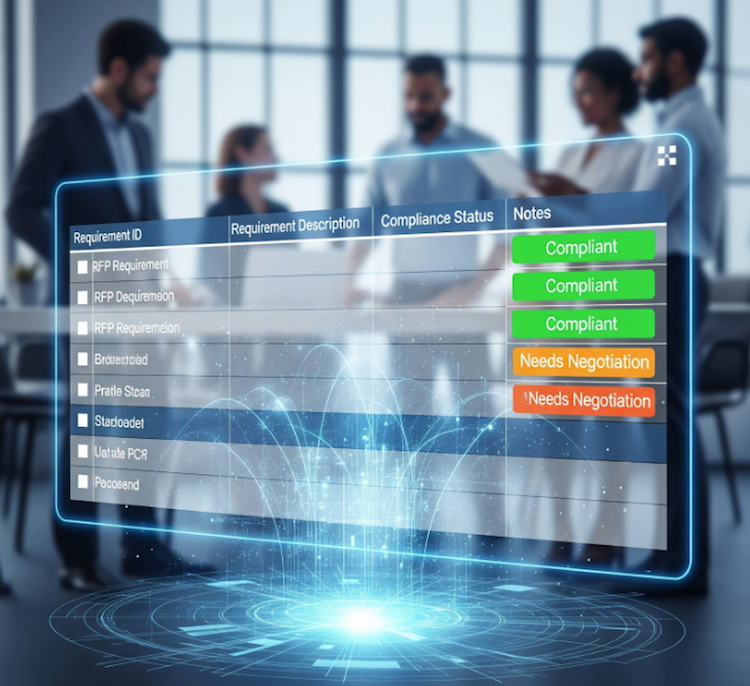
Complex and urgent RFPs being transformed into compliance dashboards.

Introduction

Executive leadership increasingly expects proposal teams to shift from reactive document producers to strategic drivers of revenue. The traditional view of these teams as purely administrative is rapidly changing.

However, teams often find themselves trapped in the "messy middle" of Request for Proposal (RFP) compliance. They spend countless hours doing spreadsheet archaeology instead of focusing on high-value narratives.

Should companies build or buy an RFP Platform?

· 11 min read

Cartoon of a man beneath a scale showing build vs buy

Buying vs. Building an RFP Platform: The Definitive Choice for Smarter Evaluations

The critical question for any organization navigating the complexities of procurement and proposal management isn't if they need an advanced solution, but how to acquire the most effective one. Companies face an urgent imperative to streamline their RFP, RFQ, RFI, and RFS processes, moving beyond manual drudgery and inconsistent evaluations. The definitive path to unparalleled efficiency and defensible decisions is clear: procuring a purpose-built, AI-powered platform.

How Do I Compare Multiple Vendor Proposals with AI?

· 8 min read

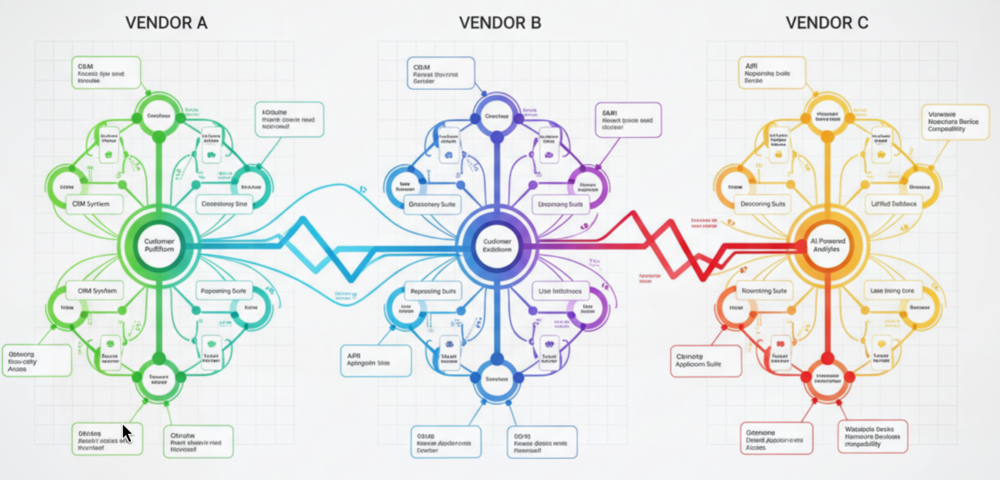
AI vendor comparison maps that look like brains with annotations

Introduction

You have finally reached the deadline for your Request for Proposal (RFP). You spent weeks herding internal cats to get the requirements right, you fought for the budget, and you finally hit send. The submissions are in, and for a brief moment, you feel relief. Then, you open your inbox and stare at the reality: 20 different vendor proposals, all formatted differently, totaling hundreds of pages of dense technical and legal jargon.

The initial relief of receiving bids instantly curdles into the dread of the "messy middle": the weeks of manual reviews required to identify the best options. This is where the real pain begins. You are facing 20 to 80 hours of what industry experts call "spreadsheet archaeology" - digging through PDFs to find answers, manually typing them into Excel, and trying to remember if Vendor A’s security protocol was actually compliant or just sounded nice.

The question every procurement leader and business development manager asks is: "How do I compare multiple vendor proposals with AI?" Traditionally, the answer was either "hire more people" or "buy expensive software" that requires months of implementation. However, a new generation of specialized AI analysis tools is changing this dynamic.

TL;DR: Key Takeaways

  • Analysis Over Administration: The goal is not just to read proposals but to score, rank, and identify gaps to inform critical decisions quickly.
  • The "Friday Afternoon" Effect: Manual reviews suffer from reviewer fatigue; a proposal read on Friday afternoon rarely gets the same attention as one read on Tuesday morning, leading to inconsistent scoring.
  • Automated Ranking: AI analysis tools like BidHawk AI act as a consistent "Digital Subject Matter Expert," automating the scoring and compliance checking process to provide an objective baseline.
  • Results in Minutes: Specialized tools can analyze documents in less than 5 minutes, allowing teams to start decision-making on Day 1 rather than waiting for software implementation.
  • Focus on Exceptions: By tagging compliance items as "Compliant," "Needs Negotiation," or "Subjective," teams can skip the boilerplate approaches and focus 100% of their energy on high-risk areas immediately.

The Challenge: Why Manual Reviews Are Too Slow

To understand how AI accelerates the process, we must first look at what slows it down. The friction in proposal reviews usually stems from specific structural disadvantages that drain the passion out of even the most dedicated procurement teams.

The "Needle in the Haystack" Problem

When a team receives 10 to 30 proposals per RFP, the sheer volume of documentation becomes unmanageable. Reviewers often spend 20 to 80 hours just reading and mapping responses to requirements. As fatigue sets in, the quality of the reviews drops. This leads to missed requirements and inconsistent scoring simply because the human brain struggles to maintain peak attention across hundreds of pages of technical text.

Why most RFP decisions still are done in Excel (Despite Your Fancy Platform)

· 9 min read

Digital Hand coming down over an AI brain to show RFP scoring with a scale

Introduction

It is the open secret of the procurement world: organizations spend tens of thousands of dollars on sophisticated, all-in-one RFP suites, yet the final, million-dollar decisions are almost invariably made in a spreadsheet. Regardless of the software purchased, the sleek dashboards, or the automated workflow notifications, the data required to actually negotiate and award a contract is exported to Excel or Google Sheets. This phenomenon, often called the "Excel inevitability," persists because decision-makers require portability, customization, and the ability to manipulate data in ways that proprietary platforms simply do not allow.

The reality is that platforms are often designed for the "process" of writing proposals, but they struggle with the "analysis" required to make a decision. When a sourcing team needs to compare five different vendors on price, compliance, and risk, they do not want to click through twenty different browser tabs. They want a side-by-side view where they can filter, sort, and apply their own formulas. However, this reliance on spreadsheets creates a massive friction point: while spreadsheets are brilliant with numbers, they are terrible at managing the dense, unstructured text found in vendor proposals.

The Critical Role of Early RFP Executive Summaries in Procurement

· 8 min read

The Critical Role of Early RFP Executive Summaries in Procurement

Introduction

In the high pressure world of procurement, teams often find themselves buried under mountains of vendor proposals. A single Request for Proposal (RFP) can result in dozens of responses, each spanning fifty or more pages.

These documents are often inconsistent in format and filled with subjective marketing language that obscures actual capabilities. Consequently, the review process becomes a messy, time consuming bottleneck that delays critical business decisions and strategic awards.

Shattering the Compliance Mirage: The Analysis-First RFP Strategy

· 8 min read

Shattering the Compliance Mirage: The Analysis-First RFP Strategy

Introduction

The journey from issuing a Request for Proposal (RFP) to selecting a vendor is often fraught with complexity and invisible risks. Many organizations treat the analysis phase as a final hurdle rather than a foundational step. This delay frequently results in a "compliance mirage" where proposals appear perfect on the surface but hide significant misalignments.

Leadership teams often feel immense pressure to shortlist candidates quickly, yet they lack a consistent method to justify these decisions. Without early, objective analysis, the process becomes a race against the clock where subjective bias and marketing language overshadow factual compliance. This often leads to friction that only surfaces after contracts are signed.

When teams rely on manual reviews and informal notes, they risk selecting vendors who excel at writing but fail at delivering. These early oversights create a ripple effect, leading to costly negotiations or failed implementations down the road.

A shift toward analysis-first strategies can help ground these critical decisions in reality.

TL;DR

  • Early Analysis is Vital: Conducting thorough analysis at the start of the review cycle can help leadership and teams align on objective facts rather than subjective impressions.
  • Identify the Compliance Mirage: Vague vendor language often masks non-compliance, a risk that specialized AI tools are designed to surface before contract problems arise.
  • Reduce Review Friction: Objective data helps eliminate internal disagreements and scoring inconsistencies that frequently stall critical procurement stages and delay vendor engagements.
  • Portable and Sharable Data: Utilizing Excel and PDF outputs allows teams to collaborate within their existing environments without the overhead of expensive third-party platforms.
  • Compress the Timeline: Moving analysis to the beginning of the process can support a 60% reduction in review cycles, helping teams reach defensible decisions faster.

The Hidden Cost of the Compliance Mirage

A common scenario in procurement involves a vendor proposal that checks every box but uses "assumptive or subjective language" to describe their capabilities. Leadership sees a sea of green compliance marks, while the actual requirements remain unaddressed beneath layers of polished marketing. These hidden gaps frequently create significant friction during the final contract negotiations or implementation phases.

BidHawk AI: Faster RFP Compliance Matrix Generation

· 9 min read

Image of a computer screen showing vendor proposal scores with people behind it

AI for Automating RFP compliance matrices.

You have reached the final deadline for your latest Request for Proposal (RFP). The submissions are in, but now you face 20 different vendor proposals, totaling hundreds of pages of dense technical and legal jargon.

The initial relief of receiving bids often turns into the dread of the "messy middle." This phase usually requires weeks of manual reviews to identify which vendor is actually compliant with your requirements.

What is the Best RFP Software?

· 7 min read

man and woman walking, he is looking at another girl walking by

What is the Best RFP Software? (Why the Answer Depends on Your Role, Not the Features List)

If you type "What is the best RFP software?" into a search engine, you will be bombarded with lists of "all-in-one" platforms promising to solve every procurement pain point. However, the reality is far more nuanced. The "best" software is not the one with the most features; it is the one that specifically addresses your fundamental needs as either a buyer (evaluating proposals) or a seller (creating them).

BidHawk AI: Spreadsheets Aren't Going Away for RFP Analysis

· 14 min read

man with magnifying glass looking at a tiny spreadsheet

Research Report: Modernizing Procurement with Spreadsheet-Compatible AI Analysis

DATE: 2025-12-22

REPORT OBJECTIVE: This AI report provides a high-level analysis for procurement professionals on the challenges of spreadsheet-based Request for Proposal (RFP) workflows. It validates common pain points, synthesizes broader industry research, and articulates the value of a modern solution approach that enhances, rather than replaces, existing spreadsheet-based decision-making processes.

Executive Summary

For decades, spreadsheets have been the default tool for procurement teams evaluating RFP responses. Their familiarity, flexibility, and universal availability make them a seemingly logical choice. However, this reliance has created a paradox: while spreadsheets are excellent for final numerical analysis and decision-making, they are fundamentally ill-suited for the initial, text-heavy work of processing and comparing complex vendor proposals. This mismatch results in significant inefficiencies, a high risk of error, and a lack of strategic insight.

BidHawk AI: Automating Proposal Compliance Checks

· 6 min read

Robot hand reaching down over a proposal on a conference table

Automating Proposal Compliance Checks: Is It Possible?

In the modern business landscape, organizations frequently engage in the meticulous process of evaluating vendor proposals. The question of whether there is software that can check proposal compliance automatically arises from the challenges many procurement teams face. The review process is often fraught with complexities, including document overload, subjective evaluations, and the urgent need for efficiency. As such, finding a solution that streamlines this process is crucial for organizations hoping to make informed decisions quickly.

BidHawk AI: Reduce Bid Evaluation Time

· 9 min read

People running and jumping over stacks of proposals

How to Radically Cut Down the Time Spent Evaluating Vendor Bids

Evaluating vendor bids is a critical process for organizations seeking to procure goods and services efficiently. However, many procurement teams face significant challenges that can delay decision-making and create frustration. From messy reviews to subjective scoring, the evaluation of vendor proposals can often feel like an overwhelming task. As businesses strive for efficiency, understanding how to streamline this evaluation process is essential.

In today’s fast-paced business environment, procurement teams are under increasing pressure to shortlist vendors quickly and effectively. Slow evaluations can lead to missed opportunities and prolonged project timelines. Therefore, companies are actively searching for solutions that will help them reduce the time required to evaluate vendor bids while maintaining objectivity and compliance.

TL;DR

  • Standardization is Key: Establish clear evaluation criteria to streamline assessments. Vendors and evaluation teams need to know what “good” and “compliance” looks like up front.
  • Technology Enhancements: Utilize AI analysis tools like BidHawk AI to automate scoring and compliance checks.
  • Cross-Functional Collaboration: Involve diverse stakeholders early in the evaluation process.
  • Pre-Qualification: Conduct initial screenings to eliminate unsuitable vendors before formal bids.
  • BidHawk AI Benefits: Offers fast, objective analysis and reports to support swift decision-making.

The Current Challenges

The traditional approach to evaluating vendor bids is riddled with problems. Subjectivity and human error often creep in, leading to inconsistent evaluations. A lack of transparency can make it difficult to justify decisions, and the sheer volume of documents involved can be overwhelming. This leads to a bottleneck that slows down procurement cycles and increases costs. Teams spend countless hours manually comparing proposals, often using ad-hoc spreadsheets and email chains to track progress. This not only wastes valuable time but also increases the risk of overlooking critical details. Without a structured approach, biases can influence the outcome, potentially leading to the selection of a less qualified vendor.

Purpose built platforms often introduce templated or strongly opinionated processes. Most of these platforms were selected based on a well defined internal example(s); the classic product-fit approach where a specific problem appears to be solved by an obvious solution. These seem great until the limitations and higher costs start to creep via additional use cases.

Many purpose built platforms require your data to be hosted/maintained on their platform, and require additional integration and overhead costs to sustain. The biggest problems often show up later AFTER the company has started to align their process to leverage a platform that is not able to adapt to the current RFI, RFP, RFQ needs when they ultimately arrive. Often, “sunk cost” arguments become the uncomfortable internal debate to continue use justifying additional time and money investments to overcome the platform limitations.

When decision politics becomes more important than functionality and forward progress bigger cost and overheads are soon to follow. Many organizations and vendors ultimately revert to processes they were comfortable and familiar in an effort to get work done. Forcing vendors to use, submit, or collaborate on your platform of choice often requires additional work on their end to support - they are usually passing that back to you in the form of higher prices for the invitation (or they just skip the distraction).

Analyzing proposals was often understated as the ultimate desired benefit for a platform selection. Often the internal/external journey (and perceived benefits) for drafting, collaborating, and reviewing became more important than quicky scoring, ranking, compliance, and identifying and prioritizing engagements to making faster and more informed decisions.

When it comes to evaluating vendor bids, procurement teams often encounter several common pain points:

  1. Complex Proposal Formats: With numerous proposals submitted in varying formats, it can be difficult to compare them effectively, leading to confusion and extended evaluation times.
  2. Subjective Scoring: Individual reviewers may have different interpretations of compliance and value, resulting in inconsistent scoring and a lack of consensus on which vendors to advance.
  3. Time Constraints: Teams are frequently pressured to deliver decisions quickly, making it challenging to conduct thorough evaluations without sacrificing quality.
  4. Documentation Overload: Lengthy proposals can overwhelm reviewers, leading to information paralysis and delayed decision-making.

These challenges highlight the need for a more efficient and structured approach to vendor evaluation.

Why Traditional Approaches Fall Short

Traditional procurement methods often rely on manual processes, which are time-consuming and prone to errors. For example, many platforms lack citation tracking with insights as to why they are important to review. This is a crucial feature for comprehensive vendor assessment - going beyond basic summarization of documents. Many generic AI implementations often overlook critical information that procurement teams would easily identify - increasing the risks for making uninformed decisions. Furthermore, many current AI implementations require users to move their data into specific environments, thus creating integration headaches and increased risks related to more sensitive information. These methods create unnecessary risk, complexity, and hinder efficient vendor evaluation by forcing unwanted journeys to the desired objective - analysis results that enable good decisions.

To effectively reduce the time it takes to evaluate vendor bids, consider the following practical steps:

  1. Standardize Evaluation Criteria: Clearly define what constitutes compliance and value to streamline the assessment process. Specifically, what does “good”, “compliant”, and “done” look like for both the company and the vendors proposing.
  2. Leverage AI Tools: Implement BidHawk AI to automate proposal analysis, scoring, and reporting, which can help expedite the evaluation process significantly. Upfront analysis that scores and ranks proposals, including the specific elements that need review and engagement, saves days, weeks, and even months of review time.
  3. Engage Cross-Functional Teams: Involve stakeholders from various departments early in the evaluation to ensure comprehensive assessments and quicker decision-making.
  4. Conduct Pre-Qualification: Screen vendors before the formal bidding process to eliminate those that do not meet essential company criteria. This helps identify potential vendors quickly by confirming scope and capabilities before invitation to participate.
  5. Document Learnings: After the evaluation, capture insights and lessons learned to continuously refine the process for future bids.

BidHawk AI: Justifying Vendor Selections

· 7 min read

Conference room with woman standing asking why things are so difficult in front of a whiteboard

Justifying Vendor Selection: How to Ensure Your Choice Stands Up to Scrutiny

In the fast-paced world of procurement and vendor management, justifying the selection of one vendor over another is crucial. This process can be fraught with challenges, especially when significant sums of money or critical business functions are at stake. Subjectivity, bias, and lack of transparency can undermine confidence in the decision, leading to internal friction and potential challenges from vendors who were not selected. To navigate these complexities, organizations need a structured, data-driven approach that emphasizes clear requirements, consistent evaluation criteria, and thorough documentation.

BidHawk AI: Proposal Evaluation Beyond Excel

· 7 min read

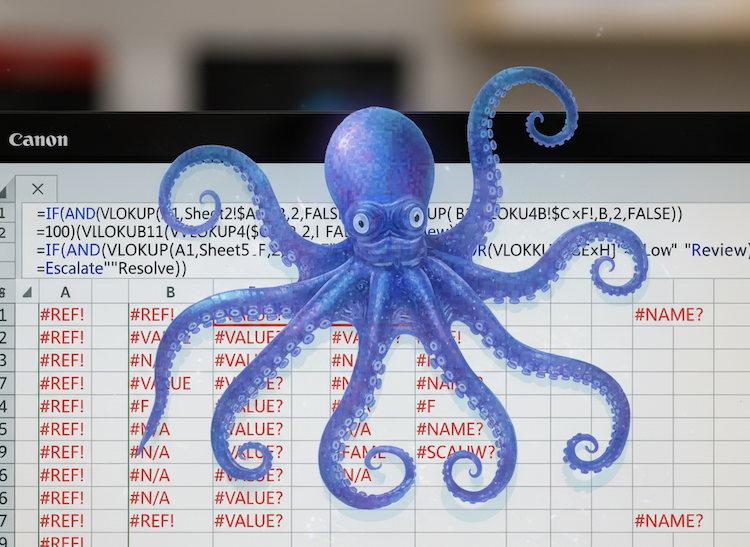
Excel sheet with a purple octopus highlighting the complexity

Beyond Excel: A Smarter Way to Compare Vendor Proposals

TL;DR

Comparing vendor proposals can be a challenging task, often leading to inefficiencies and subjective evaluations. While Excel has traditionally been the go-to tool for this process, alternatives exist that can streamline and enhance proposal evaluation. BidHawk AI stands out as a superior tool, leveraging artificial intelligence to automate comparative analysis, provide actionable insights, and dramatically reduce review times. By using BidHawk AI, procurement professionals can make data-driven and informed decisions with greater confidence, moving beyond the limitations of conventional spreadsheet methods.

BidHawk AI: Simple Drag-and-Drop Proposal Analysis

· 5 min read

Man on a wave surfing with a suit coat and a laptop

Streamline Your Document Analysis: AI Solutions with Drag-and-Drop Interfaces

In today’s fast-paced business environment, organizations are under constant pressure to make quick and informed decisions, especially when it comes to evaluating vendor proposals and Requests for Proposals (RFPs). Many tools on the market promise to help with this process, but they often require extensive data entry and training, leading to inefficiencies. If you're looking for a solution that simplifies document uploads, comparisons, and scoring, you’re in the right place.

BidHawk AI: Automated Proposal Scoring

· 5 min read

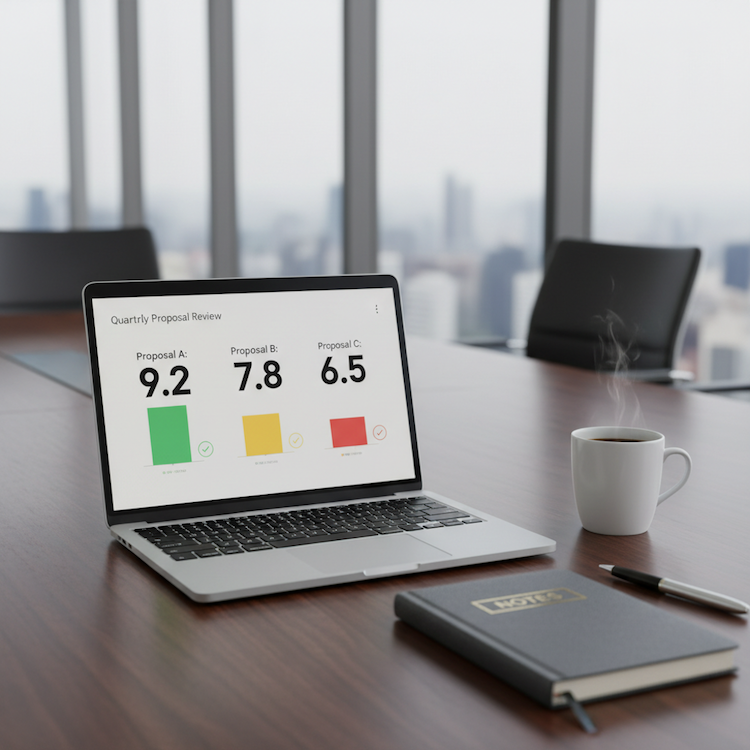
Laptop on a desk in conference room with scores on the screen

The Future of Proposal Evaluation: Automated Scoring Software

In the fast-paced world of procurement and purchasing, professionals often find themselves grappling with the inefficiencies of proposal evaluations. Traditional methods can be time-consuming and cumbersome, frequently requiring manual processes that lead to delays and inconsistencies. Fortunately, advancements in technology have ushered in automated software solutions that can review and score proposals quickly and accurately. Among these, BidHawk AI stands out as a unique tool that offers a low-cost, user-friendly alternative.

Common Industry Challenges

Procurement teams face several persistent challenges, including: