6 posts tagged with "Research Findings"

View All Tags

Procurement Enshittification: How AI is affecting Buyers and Sellers

· 11 min read

Procurement Enshittification: How AI is affecting Buyers and Sellers

Introduction

If you've tried to hire anyone in the past year, you've seen this movie before. Hiring managers are drowning in perfect-looking resumes - LinkedIn processes 11,000 applications every minute. Every candidate has the right keywords. Every cover letter sounds professional. But finding the right person has never been harder because when everyone looks perfect, you can't tell anyone apart.

Now procurement is living through the exact same crisis.

You send out an RFP and receive 40 vendor proposals instead of the usual 10 - all perfectly formatted, professionally written, totaling hundreds of pages. Everything looks impressive. But when you start reading, you realize something troubling: you can't tell anyone apart.

The Coming SaaS Apocalypse

· 11 min read

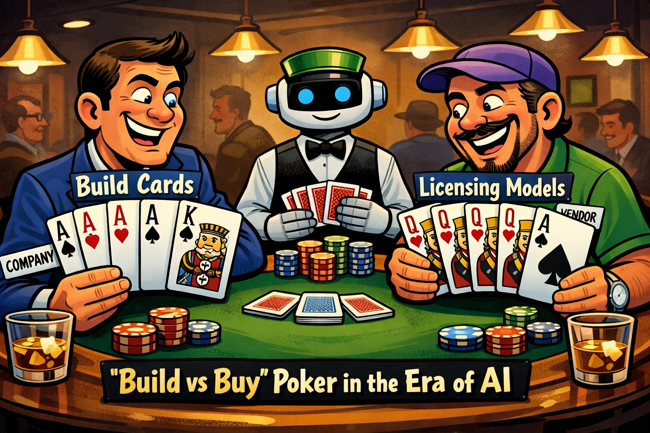
Cartoon of a Company and Vendor playing cards regarding Build vs Buy Decisions

The Coming SaaS ApocalypseThe "SaaS Apocalypse" and Hidden Taxes

For years, the modern enterprise has been buried under an avalanche of software subscriptions. This "SaaS sprawl" - a portfolio of expensive, siloed and often incomplete applications offered as a central solution for every conceivable task - creates more friction than it removes. The average company conservatively juggles over 20 different SaaS tools, each with its own per-user license fee, data silo, integration, maintenance and sustainment overheads. This model, once the symbol of modern digital transformation, is now a source of significant cost, dependency (vendor lock), duplicative complexity, and elevated security risks.

Traditional SaaS: Hidden Taxes

The conventional SaaS model, especially for complex processes like RFP and vendor management, imposes significant hidden costs that go far beyond the subscription fee. In essence, adopting a SaaS platform means you are renting a vendor's workflow which comes with inherent limitations and dependencies.

  • The Collaboration Tax: The economic friction of a base platform + seat-based pricing is a major barrier to efficiency. With prices ranging from $25 to over $500 per user per month, the cost of providing access to every necessary stakeholder becomes prohibitive. A winning proposal often requires input from infrequent but critical contributors like subject matter experts (SMEs). The per-user model forces a difficult choice: either pay for expensive licenses that sit unused most of the time or exclude key experts, reverting to inefficient email chains (or a suite of other tools to try to close those gaps).
  • The Content Treadmill: Legacy platforms often require companies to create and maintain a duplicative content library - a static "source of truth" separate from where information is originally created. Estimates suggest these platforms require 200 to 250 hours of annual maintenance just to keep content current. This "content rot" creates a crisis of trust, as teams can never be sure if the information they are using is accurate.
  • The Integration and Alignment Debt: There is an often-overlooked overhead cost related to aligning and overcoming platform limitations to implement the features and workflows you actually need.
  • New Technical Debt: As legacy platforms rush to "bolt on" AI features, they effectively increase integration complexity. This adds layers of interfaces within an already technically complicated and expensive administrative process.
  • The "Alignment" Speedbump: The movement of data between systems and capabilities is not trivial. Reality hits hard when teams face the "boring IT stuff" of data structures, types, and proprietary interfaces.
  • Sustainment Overheads: Companies are forced to incur "expensive technical sustainment overheads" just to understand, align, and leverage platform-specific tooling. Instead of solving business problems, IT teams spend their time managing the "care and feeding" of the platform itself. This creates a new form of technical debt: the cost of fighting the platform's rigid framework to make it work with modern AI capabilities - or just keeping content in sync when changes are occurring in different platforms, tools, systems.

Should companies build or buy an RFP Platform?

· 11 min read

Cartoon of a man beneath a scale showing build vs buy

Buying vs. Building an RFP Platform: The Definitive Choice for Smarter Evaluations

The critical question for any organization navigating the complexities of procurement and proposal management isn't if they need an advanced solution, but how to acquire the most effective one. Companies face an urgent imperative to streamline their RFP, RFQ, RFI, and RFS processes, moving beyond manual drudgery and inconsistent evaluations. The definitive path to unparalleled efficiency and defensible decisions is clear: procuring a purpose-built, AI-powered platform.

Top RFP Tools for 2026: Compare & Find the Best Fit

· 30 min read

award ceremony with 9th place being awarded

DISCLAIMER:

The analysis and data are presented “as is” based on available information to provide a quick overview of market segments, options, and pricing as of January 6, 2026. The markets and models are changing - always independently verify the material (links to sources provided at the end). Enjoy!

1.0 TL;DR - Executive Summary

The procurement and proposal software market remains dominated by large, high-cost enterprise platforms and specialized point solutions serving distinct Commercial and Government needs. A new category is emerging as AI-native tools like BidHawk AI act as workflow accelerators, delivering targeted value without replacing existing platforms and with far lower adoption friction through pay-as-you-go pricing. This shift threatens incumbent subscription-based revenue models while creating a clear opportunity for organizations to add high-ROI AI capabilities quickly and flexibly.

The Top 10 RFP Tools & Platforms

RankProductFeesMinimum Terms
1SAP AribaQuote-Based (Median ~$61,513/yr, range $15,531-$371,134)Multi-Year Contract
2CoupaQuote-Based (Median ~$61,513/yr, range $15,531-$371,134)Annual Subscription
3Responsive (RFPIO)Quote-Based (Median ~$14,000/yr, range $5,022-$29,380)Annual Subscription
4LoopioStarts at $20,000/yr (10 users)Annual Subscription
5BonfireQuote-Based (Starts ~$1,000/yr, typical much higher)Annual Subscription
6JaggaerQuote-Based (Starts ~$45,000/yr)Two-year minimum
7IvaluaQuote-Based (Starts at $150,000/yr)Annual Subscription
8ZycusQuote-Based (Starts ~$50,000/yr, range $50,000-$250,000)Annual Subscription
9BidHawk AI✅ $0 (25 credits), Pay-as-you-go additional credit purchases✅ NONE (Pay-per-use)
10QorusDocs❗Call Vendor❗Call Vendor

BidHawk AI: RFP Platform TCO - Analyze & Save

· 7 min read

People standing in conference room with paper falling from the ceiling onto the table

The True Cost of "Enterprise" RFP Software: A 3-Year TCO Analysis

Introduction

"What is the real total cost of ownership for RFP platforms?" This is the question every procurement leader and sales director should ask before signing a contract, yet it is often overlooked until the renewal invoice arrives. The sticker price of enterprise software is rarely the price you actually pay. Between implementation fees, mandatory training, and the sunk cost of internal hours spent managing the tool, the Total Cost of Ownership (TCO) often balloons far beyond the initial quote.

A pervasive issue in the RFP software market is the disconnect between purchasing requirements and actual usage. Organizations are frequently forced to over-purchase licenses to meet vendor minimums, only to see the software become "shelfware" due to poor user experiences and high barriers to entry. When the work required to get data set up and ready for analysis takes longer than the actual analysis itself, teams stop using the tool.

This post breaks down the financial reality of traditional RFP platforms versus modern, analysis-first tools, revealing why shifting to a usage-based model is the only logical choice for small to mid-volume teams.

TL;DR: Key Takeaways

  • The Sticker Shock: Base subscription costs for enterprise platforms often start at $20,000-$28,000+ per year, but hidden fees for integration and support drive this higher.
  • The "Seat Tax": Vendors often impose minimum seat counts (e.g., 5 or 10 users), forcing companies to pay for licenses that sit empty or are used infrequently.
  • Opportunity Costs: Weeks of implementation and ongoing library maintenance create a "time-to-value" crisis where teams spend more time managing the software than analyzing proposals.
  • Cost-Per-Use Reality: For a team running 10 RFPs a year, the effective cost per proposal on an enterprise platform is over $2,000, compared to $10-$50 with analysis tools like BidHawk AI.
  • The BidHawk AI Advantage: By prioritizing immediate analysis over platform infrastructure, BidHawk AI delivers results in minutes and reduces the entire review process by approximately 60%.

BidHawk AI: Spreadsheets Aren't Going Away for RFP Analysis

· 14 min read

man with magnifying glass looking at a tiny spreadsheet

Research Report: Modernizing Procurement with Spreadsheet-Compatible AI Analysis

DATE: 2025-12-22

REPORT OBJECTIVE: This AI report provides a high-level analysis for procurement professionals on the challenges of spreadsheet-based Request for Proposal (RFP) workflows. It validates common pain points, synthesizes broader industry research, and articulates the value of a modern solution approach that enhances, rather than replaces, existing spreadsheet-based decision-making processes.

Executive Summary

For decades, spreadsheets have been the default tool for procurement teams evaluating RFP responses. Their familiarity, flexibility, and universal availability make them a seemingly logical choice. However, this reliance has created a paradox: while spreadsheets are excellent for final numerical analysis and decision-making, they are fundamentally ill-suited for the initial, text-heavy work of processing and comparing complex vendor proposals. This mismatch results in significant inefficiencies, a high risk of error, and a lack of strategic insight.